• Door naar de hoofd inhoud
  • Home
  • Vakantie Sint Eustatius
    • Geschiedenis
    • Cultuur
    • Duurzaam toerisme
    • Natuur
  • Volop genieten
    • Duiken
    • Wandelen
    • Cultuur snuiven
    • Stranden
  • Waar verblijven
    • Hotels Sint Eustatius
    • Appartementen
    • Gastgezin
  • Eten & Drinken
    • Restaurants
    • Bar
    • Eetgelegenheden
  • Plan je reis
    • Hoe kom je op Sint Eustatius?
    • Reistips
    • Vind je weg
  • Nieuws
    • Persberichten
    • Brochures
    • Agenda
    • Vacatures
    • Presentaties
    • Nieuwsbrieven
  • Blog
  • Videos
  • Contact
  • Engels
  • Nederlands

Statia Tourism

Klein eiland met grote historie

Header Rechts

  • Nieuws
    • Persberichten
    • Brochures
    • Agenda
    • Vacatures
    • Presentaties
    • Nieuwsbrieven
  • Blog
  • Videos
  • Contact
  • Engels
  • Nederlands
  • Home
  • Vakantie Sint Eustatius
    • Geschiedenis
    • Cultuur
    • Duurzaam toerisme
    • Natuur
  • Volop genieten
    • Duiken
    • Wandelen
    • Cultuur snuiven
    • Stranden
  • Waar verblijven
    • Hotels Sint Eustatius
    • Appartementen
    • Gastgezin
  • Eten & Drinken
    • Restaurants
    • Bar
    • Eetgelegenheden
  • Plan je reis
    • Hoe kom je op Sint Eustatius?
    • Reistips
    • Vind je weg

Blogs

4 april 2023

Viewpoint

On the Quill Trail, it is highly recommended to take a small detour to the viewpoint. Just turn left at the clearly marked junction before taking the path up to the crater rim (right). Beautifully framed by trees, you can see all the way down towards Oranjestad and Signal Hill. In the distance, Saba rises out of the deep blue ocean. The highest peak, Mount Scenery, is often covered in clouds. On this day, however, the cloud cover lifted to present the whole outline of the island.

In the clip showing the Quill Trail, Courtney and Steve take a little rest on the bench, before the last climb up towards the crater rim and the gorgeous view inside the dormant volcano, the Quill: https://youtu.be/zhzqrlx7jqY. The whole path is clearly marked, well-maintained, and mostly shaded. Hikers start at the top of Rosemary Lane (140 meters above sea level) and after 1.6 km reach the crater rim around 400 meters above sea level. The difficulty of this hiking trail is moderate. It is best to plan for 2-3 hours (round trip) to have enough time to enjoy nature and take pictures and videos.

Watch it on YouTube
Viewpoint Quill Trail

Tourist tree / gum tree (Bursera simaruba)

This is one of the first tall trees you can spot along the Quill Trail. The gum tree (Bursera simaruba) is easily identified by the reddish-brown bark which exfoliates in thin, small flakes. As this looks very much like a tourist who spent too much time in the Caribbean sun, this tree is locally called the tourist tree.

The trunks of younger trees often have a green colour underneath which sets a wonderful contrast to the red flakes - especially when the sunlight shines through. When photographing or filming, play with different angles and views to create your very own unique travel memories. Book a guide to learn more about the flora and fauna along the hiking trails of St. Eustatius: statia-tourism.com/contact.

Gum trees can grow up to 30 meters and attract birds and butterflies. In this case, the tree trunk is used by termites. Termites are a group of insects which consume a wide variety of decaying plant material from wood via leaves to soil humus. This is an important ecosystem service (decomposing). They are often called white ants, even though they are not related to ants. You hardly ever see them out in the open as they create their own protected path - just like a tunnel. All you see, are the black lines along the trees like in this picture.

Tourist tree / gum tree (Bursera simaruba)

Forest senery

A forest dreamland is waiting for you on St. Eustatius. This small Dutch island offers some of the best hiking opportunities in the Caribbean. Every trail has its own charm, and offers different views and nature experiences. Visit Statia to get enchanted. Discover all the trails and more: statia-tourism.com/plan-your-trip/find-your-way/.

The Quill Trail starts off in the scrubland. While hiking up the dormant volcano, the vegetation goes quickly over to mountain thickets. Dry evergreen forest is changing into semi-evergreen seasonal forest after you entered the protected zone of the national park at 250 meters above sea level. The further you venture up, the taller the trees get. Often their roots are not just holding themselves firmly in the ground, but the roots of one tree are holding onto the ones of another. After all, the forest is one big living symbiosis. Feel its energy!

Discover all the trails and more
Forest senery

Paper wasps: Jackies

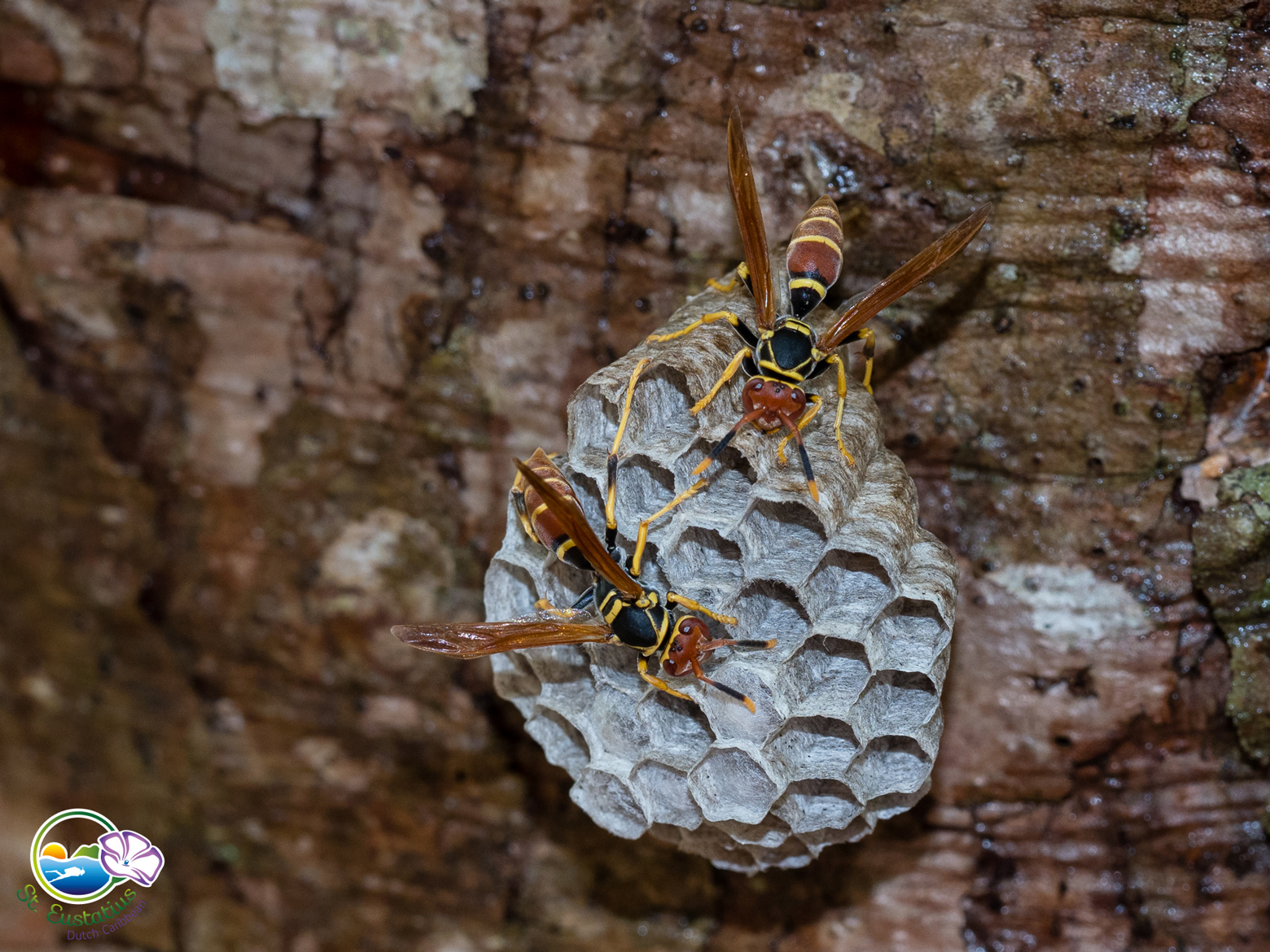
Paper wasps (Polistes sp.) can be found attached to branches or trunks along the trails in the Quill national park on Statia. Also known as jackies they are harmless when left alone. However, they do have a stinger and will use it when pushed into a corner or feeling the need to defend their nest.

The nests are the reason Polistes are called paper wasps. First, the insects gather fibers from plant stems and dead wood. Then, they mix these fibers with their saliva. Finally, they use this grey or brown papery material to construct their nests.

The cells of the open comb are used for brood rearing. On the back, there is a stalk which attaches the nest to a branch or other structure. Interesting detail according to Wikipedia (en.wikipedia.org/wiki/Paper_wasp): "Paper wasps secrete a chemical which repels ants, which they spread around the base of the anchor to prevent the loss of eggs or brood."

In general, lots of insects are threatened by human activities in particular the way we industrialized our agriculture. Pesticides, fungicides, herbicides and fertilizers are killing blindly. Same as in the sea, a lot of creatures and their functions aren't even known or their role within the ecosystem understood.

We are not only part of nature, we also depend on functioning ecosystems and stable conditions for our survival. Survival of the fittest doesn't mean there will be a last species standing after killing off the rest. It emphasizes how adapting and evolving create roles and links within nature and life on this planet.
Paper wasps: Jackies

Geplaatst in: Blogs

4 april 2023

A new series of short films brings the Statia 'The Caribbean's Hidden Treasure' to you. Whether you are exploring  St. Eustatius from the comfort of your home,  are planning to  visit or are cherishing the memories of your last trip, these clips  were created for you. The main attractions of our incredible island are nature, relaxation, history and diving embedded in a tranquil, safe, friendly and laid-back environment.

Hiking to discover Statia

Hiking is a wonderful way to combine nature and history on Statia. One after the other, we introduce the numerous hiking paths of our mesmerizing island. We highly recommend pacing yourself along the trails. Not only will you notice more details and remnants of the past, and spot interesting plants and animals, but you also  will get the chance to connect with  the locals.

According to the local government, approximately 3,200 people live on this Dutch Caribbean island. Same as in nature, the cultural landscape is diverse. These days, 52 nationalities from around the world call Statia home. Everybody is greeting each other. Yes, the honking is just to say hello.

We invite you to immerse yourself fully in the atmosphere of the island: diverse, friendly and easy-going. Check which trail is offering just the right combination of relaxation and challenge for your mood and stamina and discover what you can expect along the way.

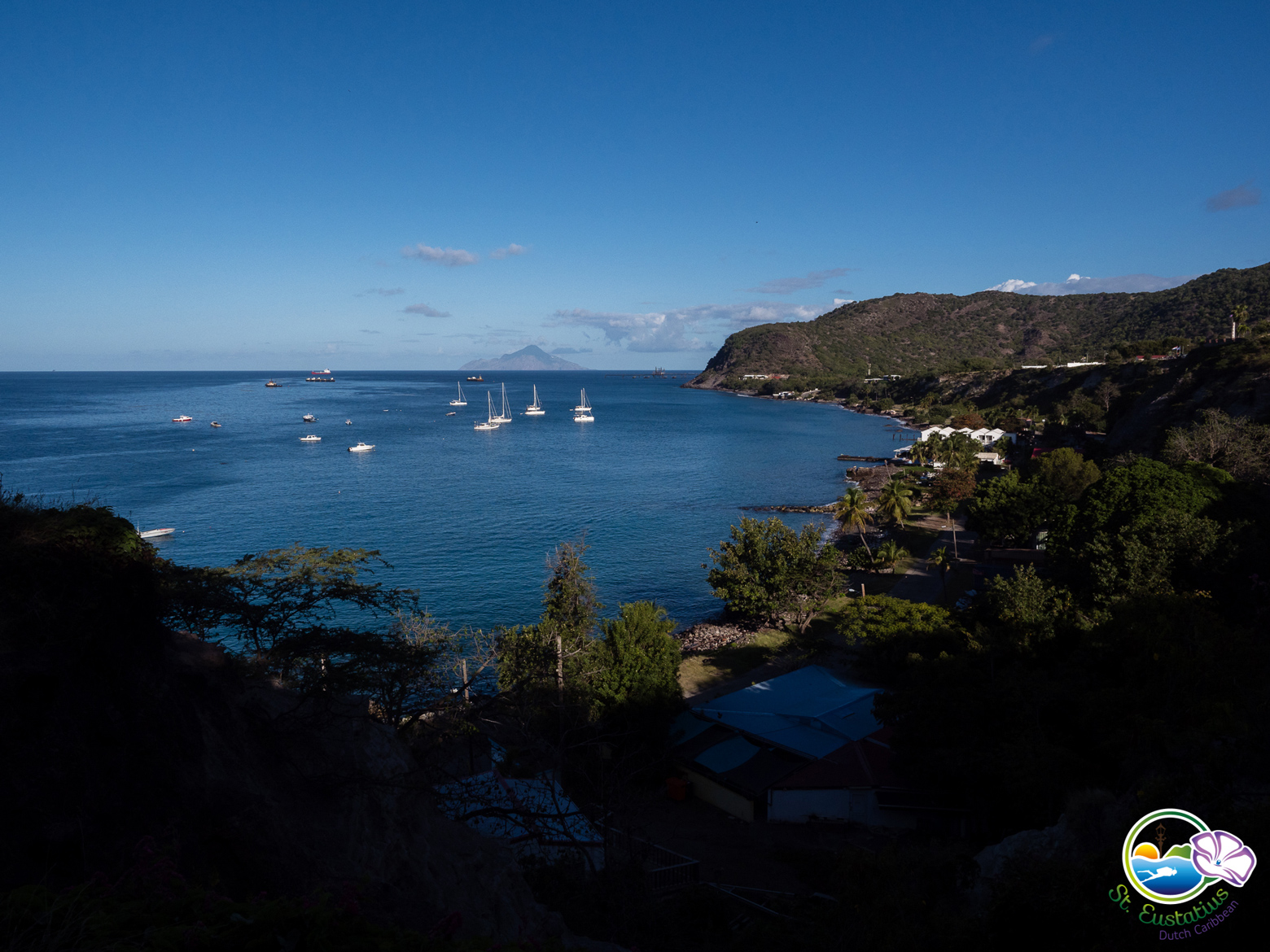
Oranje Bay and Saba from the top of Tompi Trail (photographer: Nicola Jaeger)

Oranje Bay and Saba from the top of Tompi Trail (photographer: Nicola Jaeger)

Two alternative routes up to the Quill National Park

The first film starts off in Lower Town Oranjestad. We walk through Upper Town and end at the top of Rosemary Lane from where you enter the Quill National Park. There are two routes to take you from the Caribbean sea to Upper Town, the current economic and administrative center of Oranjestad.

Tompi Trail is the shorter path. It leads up the cliff between Blue Bead Restaurant and St Eustatius National Parks (STENAPA), while the Bay Path coils up from the center of Oranje Bay to the Catholic Church and Fort Oranje.

The latter was started by the French before the island‘s heydays. Already a busy trading center within the region, the economy really took off in 1756 after the Dutch declared Statia a free port. Without any customs duties, Statia turned into a hub for all kind of goods — legal and illegal. Statia offered neutral ground for business in the middle of British (Jamaica, St. Kitts, Barbados, Bermuda), French (Saint-Domingue, Sainte-Lucie, Martinique, Guadeloupe), Spanish (Cuba, Santo Domingo, Puerto Rico) and Danish (Virgin Islands) territories.

Some history along the path

Take your time to discover the ruins and restored buildings in Lower Town. They offer a chance to dive into history. After all, Statia is also known as 'the historic gem'. Let your imagination wander. Back in the 18th century Lower Town must have been hustling and bustling with life. As many as 20,000 people were on Statia at that time. Two rows of about 600 warehouses stretched along the shore.

Neutrality and tax-free haven were the man-made reasons for Statia's golden era. Natural factors gave the island their blessing. Conveniently located between destinations, Statia was favourable as captains could make use of the trade winds bringing ships from the east towards this volcanic rock. Obviously, there are more islands around. However, Statia was the only one providing a natural harbour that is protected from the easterly winds and offers sandy anchoring at depths of 10 to 30 meters (33 to 99 feet) providing shelter also for the biggest boats of those times. With more than 3,000 ships per year, Statia was THE busiest port in the world and turning the island into the Golden Rock.

Some nature along the path

There are various flowers blooming in Lower Town, attracting birds and butterflies. When the succulent plant Aloe vera shows its yellow flowers, hummingbirds are not far behind. Aloe vera is widely used in cosmetics as well as medicinal purposes. For example, it is very effective to nurture the skin after sunburns. The Antillean crested hummingbird (Orthorhyncus cristatus) is after the nectar of the plant though. While the male is bright and colorful, the female is duller. Hummingbirds are known for their fast, maneuverable flight and are capable to hover in one spot whilst rapidly flapping their wings. The sound of this movement led to their common name.

Hummingbird at Aloe vera plants in front of STENAPA‘s office (photographer: Nicola Jaeger)

Hummingbird at Aloe vera plants in front of STENAPA‘s office (photographer: Nicola Jaeger)

There is a chance to meet one of the flagship species of Statia right at the beginning of this trail. The Lesser Antillean iguana (Iguana delicatissima) likes to hang out on the trees and roofs of STENAPA. Sometimes one or multiple are clearly hanging out in the sun, other times hide   camouflaged in the trees. You can always ask one of the employees or volunteers for help find one. Young iguanas are bright green, but they become more greyish-brown when growing older. Iguanas are almost exclusively herbivores and play an important role within the ecosystem as distributors of seeds.

Option 1: Tompi Trail

From STENAPA, the quickest access to the Quill is via Tompi Trail. It is a sand and gravel path with wooden boards forming steps at the steep parts up the cliff. Anybody with difficulty keeping their balance profits tremendously from a (hiking) stick and good shoes with good grip on this part. The rest of the route is paved ground. The Bay Path is steep too and more exposed to the sun.

After coming up Tompi Trail, take a look at some ruins to your right. In the distance, there is the round base of a mill and some walls stick out of the area mainly covered in Coralita (Antigonon leptopus), an invasive plant which is rapidly spreading across Statia. Despite the beautiful pink or white flowers, this fast-growing, climbing vine, originally from Mexico, causes a threat to native species. Ground surveys indicate that 15-33  percent of the island is covered with Coralita. According to the DCNA (Dutch Caribbean Nature Alliance), satellite imagery will improve monitoring and thereby support a targeted approach to keep Statia‘s biodiversity high. On 'Kerkweg', the paved road, Tompi Trail unites with Bay Path Route. Turn right there and then left onto Rosemary Lane.

Option 2: The Bay Path

Coming from the harbour, there is a shortcut right behind the Old Gin House which meets the steep and winding Bay Path. Alternatively, you can continue walking towards the green gate with the sign “Don‘t let the goats in, no matter what they tell you” and begin the climb from there. How many people have passed by these stone walls? In the evening, the path is lit by old-style street lanterns.

To the right, there is Claes Gut, a series of walls and drainage allowing excess rainwater to flow to the sea. On the left, the Roman Catholic Church is coming into sight. While the church was built in 1910, the bell tower dates back to the 1980s. There is a whole series of beautiful old houses ready to tell their story, including the one where the Tourism Office is located.

You can book a historic city tour or buy the “Historical Walking Tour Guide” at the Museum. In this article, we focus on two of the oldest buildings on the island: Fort Oranje and The Dutch Reformed Church. The Fort was built by the Dutch on the location of a French Fort dating back to 1629. Surrounded by stone walls, there was one major entrance with a drawbridge over a moat. Instead of sewage water, the moat was overgrown with acacia bushes spreading their long thorns. Only a small  part of that moat is still visible today.

Following Kerkweg will bring you to more interesting sights such as Wilhelmina Park and the Dutch Reformed Church. Built in 1755, the church repeatedly lost its roof due to hurricanes, and is preserved without one now.  The tower of the church was the tallest building on the island and  was used to help navigate ships in and out of the harbour back in the day. If you have the time before continuing to Rosemary Lane, stroll around to look for the graves of many interesting figures from Statia‘s history, like commander Jan de Windt and commander Johannes de Graaff.

Fort Oranje from the Catholic Church in the evening sun (photographer: Nicola Jaeger)

Both routes go up Rosemary Lane

This 1-km long road leads you through a residential area all the way up to the beginning of the trails of the Quill National Park. Starting off slowly, the climb of Rosemary Lane is turning the steepest right before the end of the road. That‘s where Rita offers the last cool drink before you enter the national park or the first one after you have finished your hike.

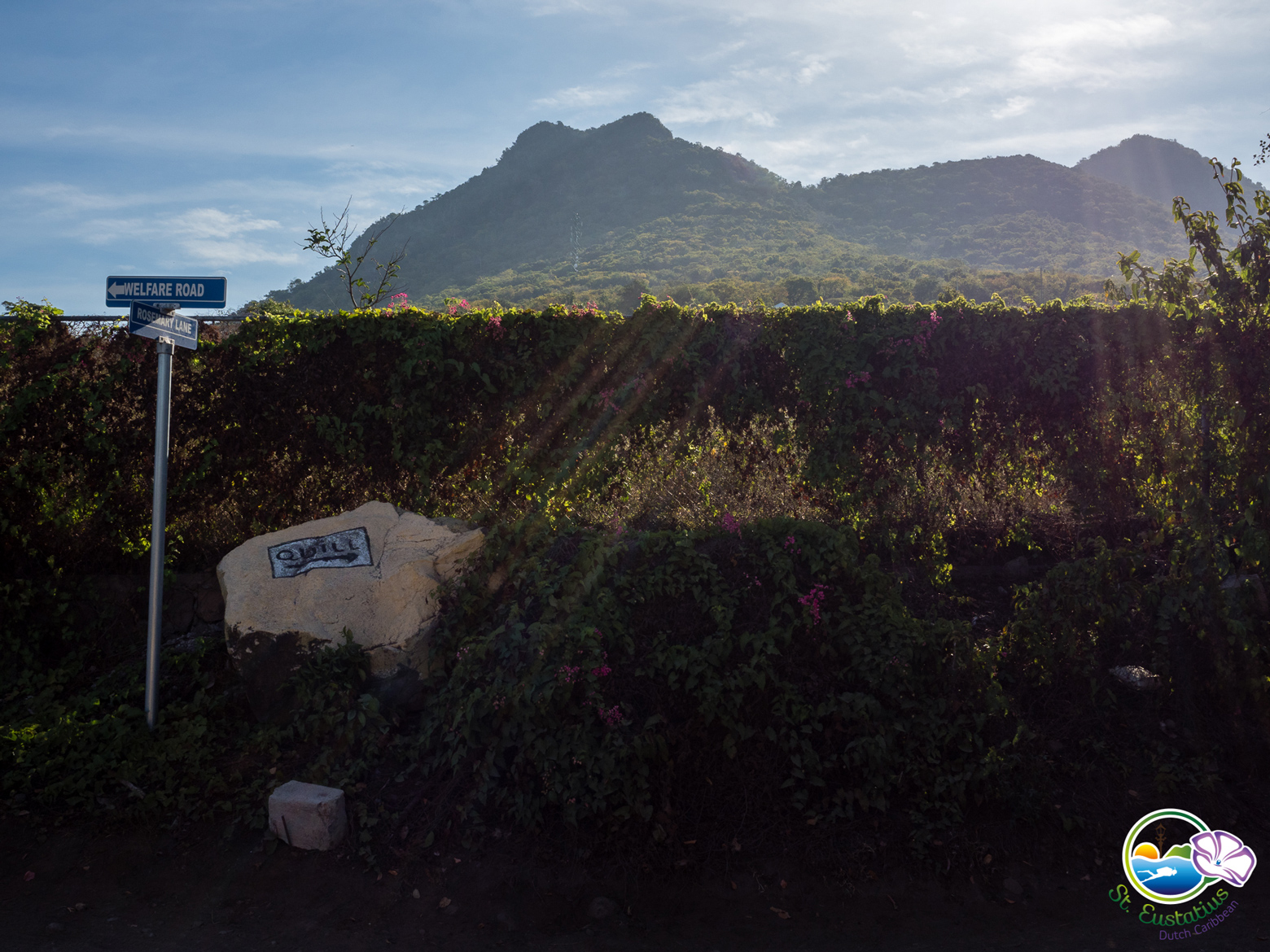
Always take plenty of drinking water with you (at least 1.5  liter per person) and avoid the hottest times of the day between 11 am and 3 pm. At the end of Rosemary Lane, a yellow-painted stone points you in the right direction where all the Quill trails begin. If you haven‘t spotted the coralita earlier on your path, you can see it overgrowing the fence here. If you are on a tight schedule or for any other reason want to shorten your hike, ask one of our island taxi drivers to drop you off at the entrance of the national park and enjoy all the scenery on your way back down.

The Quill at the top of Rosemary Lane (photographer: Nicola Jaeger)

The Quill

Support the island and make it your own experience

We recommend taking the time to discover the remnants of history in Upper and Lower Town, either on your way to or back from the Quill. However, you can also combine the Bay Path and Tompi Trail in one walk to create your own little hiking loop. Especially during the early morning and late afternoon, you will be rewarded with golden light adding to the captivating scenery and views awaiting you.

You can buy your trail tag at Statia Tourism (Opening hours: Monday to Thursday 8 am to 5 pm, Friday 8 am to 4.30 pm) or STENAPA (St. Eustatius National Parks) along the way or purchase it online. It is valid for one calendar year and serves as the entrance to both the Quill as well as Boven National Parks. The money is used to maintain the trails and protect the national parks for future generations. Leave nothing but footprints. Take nothing but memories.

Geplaatst in: Blogs

6 maart 2023

Papaya Inn banner

By Nancy Baye

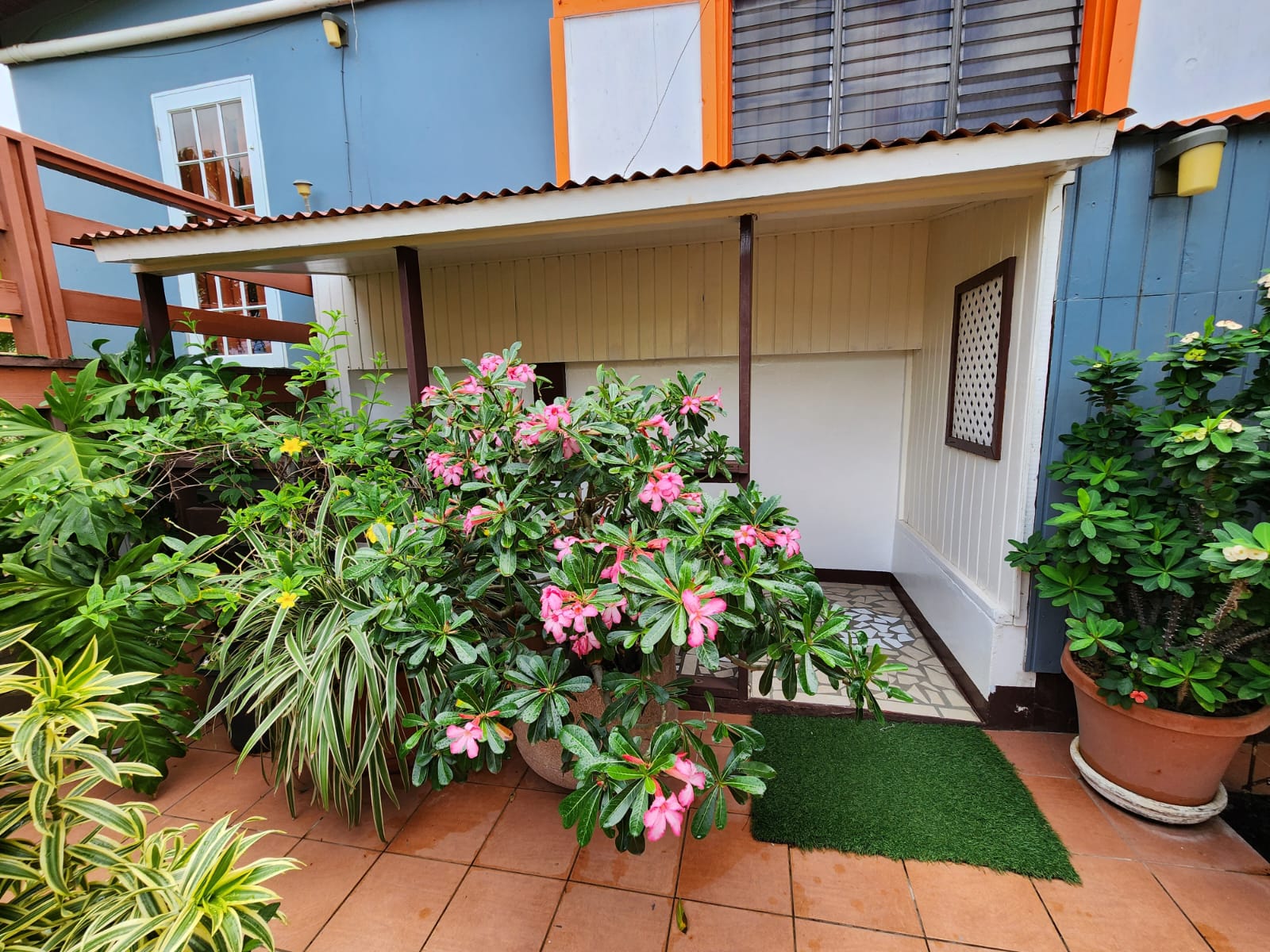
Manager Marie Rigobert is known to the locals as Ms. Marie, but rumour has it that some tourists simply call her Ma. The term of endearment is well-deserved as she and her staff are committed to providing a safe, enjoyable stay on the Caribbean gem of an island, Statia. The hospitable attitude is reflected in one of the things that the Inn is famous for, its gardens. A multitude of plants and flowers thrive here. Ms. Marie has poured herself into caring for the lush greenery, which evokes the tranquility of a tropical rain forest. In fact, it’s the first thing she shows me, taking me on a tour around the property to see the horticultural babies she’s so proud of. Along the way, tucked among the foliage are seating nooks where guests can enjoy the peace and quiet.

Papaya Inn and Papaya Blue offer a variety of room types, depending on the traveller’s needs. Mine had a kitchenette, separate W/C and shower room, wardrobe, spacious living area, king-sized bed. It opened onto a delightful patio. Standard features in all rooms include that much-needed air conditioning, free wi-fi, mini fridge, flat-screen TV and Netflix! True to the name, all rooms offer a lovely burst of papaya colour in the décor. For me, one of the nicest touches was the note left among the swan towels and fresh purple blossoms on my bed. The note welcomed me personally and provided all the relevant details for my stay, all with a conveyance of warm hospitality.

Papaya Inn

Breakfast is available each morning, with a variety of options that change daily. There’s something for everyone, including gorgeous fresh fruit. Guests can sit inside or enjoy their meal in one of several outdoor seating areas. All the staff are very friendly, happy to accommodate any special needs, and always ready with a smile.

Parking is available, but if you’d prefer to be picked up from the port or airport, reach out to the Inn. If you like to walk, you’ll find much to do within a 15-to-30-minute stroll. Just remember that sundown falls fast and early at this latitude, so arrange a ride back in the evening.

Papaya Inn

Geplaatst in: Blogs

13 december 2022

This article is published on the blogs.timesofisrael.com-website. Click the button below to read the full article.

Read the article here

Geplaatst in: Blogs

30 november 2022

Two Beautiful Options for your
Dive and Stay Package

The best gift is the one full of fun and memories with your family and friends.
No clutter, no dusting, no guilt!

Go to our Website
Book Now

Gallows Bay, St. Eustatius
WhatsApp +599-319-1819

Geplaatst in: Blogs

13 oktober 2022

https://www.reisjevrij.nl/sint-eustatius-dagtrip-statia/

Geplaatst in: Blogs

  • « Ga naar Vorige pagina
  • Pagina 1
  • Pagina 2
  • Pagina 3
  • Ga naar Volgende pagina »

Contactformulier

Stuur ons eventuele vragen of verzoeken. Wij beantwoorden uw vragen zo snel mogelijk.

"*" geeft vereiste velden aan

Naam*
Dit veld is bedoeld voor validatiedoeleinden en moet niet worden gewijzigd.

Over Sint Eustatius

› Geschiedenis

› Cultuur

› Duurzaam toerisme

› Natuur

Volop genieten

› Duiken

› Wandelen

› Cultuur snuiven

› Stranden

Eten en drinken

› Restaurants

› Bar

Plan je reis

› Hoe kom je er

› Reistips

Contact

Downloads

© Copyright - 2025 Statia Tourism · Alle rechten voorbehouden
Ontwikkeling door